

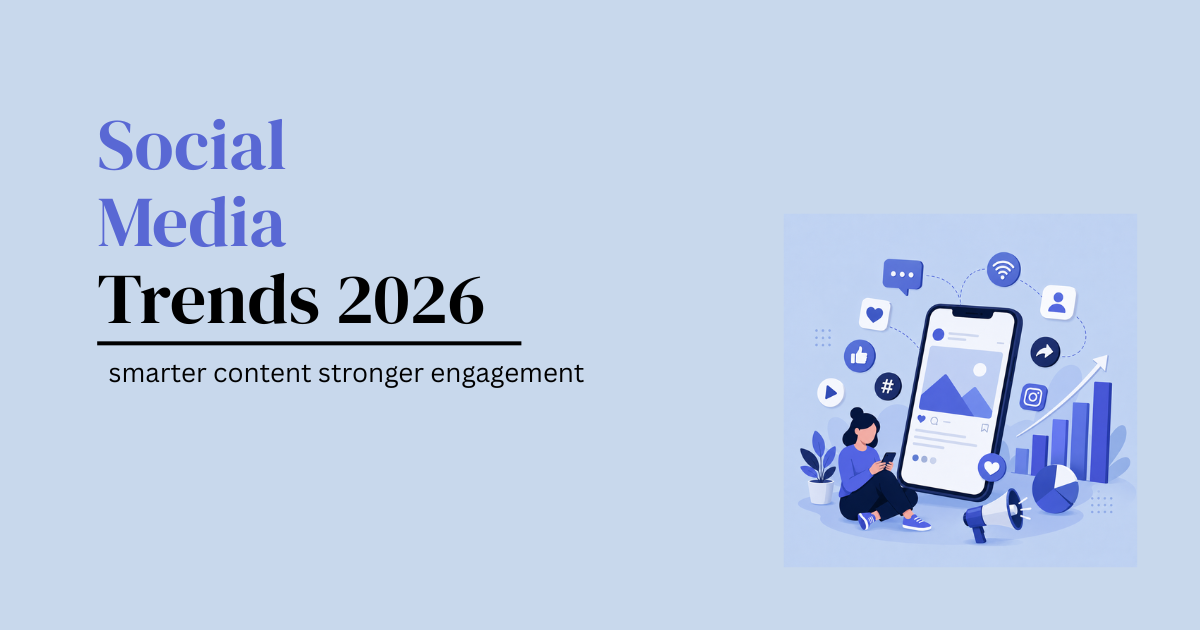
Social media continues to be one of the fastest-changing areas of digital marketing. Platforms update their algorithms constantly, and user behavior shifts just as quickly. Understanding social media trends 2026 can help businesses keep their content relevant, connect with the right audience, and maintain strong engagement across different platforms.
1. Short-Form Video Still Leads
Short, engaging videos continue to play an important role across social media platforms. Reels, Shorts, and other short-form formats give businesses an opportunity to communicate their message quickly and creatively.
Businesses can use short videos to showcase products, share tips, answer customer questions, introduce team members, and provide behind-the-scenes content. However, creating useful and engaging videos is more important than simply posting frequently.
2.AI-Generated and AI-Assisted Content
Artificial intelligence is becoming a useful tool for social media content creation and is one of the key social media trends 2026. Businesses can use AI to brainstorm ideas, create content outlines, write captions, analyze data, and support visual content creation.
However, completely automated content may feel generic. Adding personal experiences, original opinions, brand personality, and real customer insights can make AI-assisted content more authentic, engaging, and relevant to the target audience.
3. Rise of Niche Communities
Many brands are moving beyond the idea of reaching everyone. Instead, they are focusing on smaller communities built around specific interests, industries, problems, or lifestyles.
Niche communities can create stronger relationships because the content is more relevant to the people who see it. Businesses can build these communities by encouraging conversations, answering questions, sharing useful information, and listening to customer feedback.
4. Social Commerce Growth
Social media is increasingly becoming part of the customer buying journey. Users can discover products, research brands, watch demonstrations, and in some cases complete purchases directly through social platforms.
Businesses in industries such as fashion, beauty, food, and retail can use product-focused content to help customers understand what they offer. Clear product information and genuine customer reviews can also support purchasing decisions.
5. Authentic, Unpolished Content
Audiences often respond well to content that feels genuine and relatable. Behind-the-scenes videos, employee moments, customer experiences, and simple educational posts can help businesses show the human side of their brand.
This does not mean every post needs to look unprofessional. The goal is to create content that feels natural instead of making every piece of content look like a traditional advertisement.
6. Working With Marketing Agencies for Social Media
Managing multiple social media platforms can require considerable time and planning. Many small businesses therefore work with a social media marketing agency for small business to handle content planning, posting, engagement, advertising, and performance tracking.
A professional agency can help businesses create a consistent content strategy while allowing business owners to focus on their daily operations.
7. Growth of Organic Engagement Strategies
Paid advertising can help businesses reach specific audiences, but organic social media marketing remains useful for building relationships and long-term brand awareness.
Responding to comments, answering messages, creating educational content, and participating in relevant conversations can help businesses develop a stronger connection with their audience.
The focus should not only be on gaining followers. Meaningful interactions and relevant conversations can be more valuable for building an active community.
8. Choosing the Right Local Partner
Businesses that need professional social media support may look for small business social media marketing companies that understand their industry, audience, and local market.
A good strategy should be based on the business's goals rather than using the same content approach for every company. Local businesses can also benefit from content that highlights their location, services, customers, and community involvement.
9. Platform Diversification
Relying entirely on one social media platform can make a business more vulnerable to algorithm changes or changes in user behavior.
Maintaining a presence on multiple relevant platforms can help businesses reach different audience groups. However, this does not mean businesses need to be active everywhere.
Choose platforms based on where your target customers spend their time and where your content format works best.
10. Data-Driven Content Decisions
Successful social media strategies increasingly depend on performance data. Businesses can review metrics such as reach, engagement, video views, clicks, website visits, and conversions to understand which content performs well.
Instead of guessing what the audience wants, businesses can use these insights to improve future content.
Regularly reviewing analytics also helps identify which topics, formats, and posting approaches are worth continuing.
11. Employee-Generated Content
Employees can provide a different perspective on a company and its culture. Behind-the-scenes posts, workplace experiences, product demonstrations, and employee stories can make a brand feel more human.
Employee-generated content can be especially useful when employees naturally share their expertise or experiences rather than simply repeating promotional messages.
Businesses should provide clear guidelines while allowing employees to maintain their own authentic communication style.
12. Longer-Form Content Makes a Comeback
Short-form video remains popular, but longer content also has an important role. In-depth videos, educational posts, interviews, podcasts, and detailed discussions can help brands explain complex topics and develop stronger relationships with their audiences.
Businesses should choose content length based on the topic and audience rather than assuming every post needs to be short.
13. Live Streaming Continues to Grow
Live streaming gives businesses an opportunity to interact with their audience in real time. Brands can use live sessions for product demonstrations, interviews, Q&A sessions, tutorials, and announcements.
The ability to answer questions directly can make live content feel more personal and interactive. Businesses should prepare key talking points while leaving enough room for natural conversation.
14. Privacy-Conscious Advertising
Data privacy continues to be an important consideration for digital advertising. Customers are increasingly aware of how their information is collected and used.
Businesses should communicate clearly about data practices and follow applicable privacy requirements when collecting or using customer information.
Transparent communication can help businesses build trust while creating a more responsible approach to digital advertising.
15. How Businesses Should Adapt
The social media trends 2026 landscape shows that businesses need to remain flexible and audience-focused. Some practical steps include:
- Prioritize useful short-form video content.
- Focus on genuine community engagement.
- Balance organic content with relevant paid campaigns.
- Use AI as a support tool rather than replacing human creativity.
- Review analytics regularly.
- Choose platforms based on your target audience.
- Experiment with different content formats.
- Keep your brand communication authentic.
The most effective strategy will depend on the business, industry, audience, and marketing goals.
16. Cross-Platform Analytics
Managing several social media platforms can make performance tracking difficult. Cross-platform analytics tools can help businesses bring important data together and compare performance across different channels.
Instead of looking at follower numbers alone, businesses should consider meaningful metrics such as engagement, clicks, leads, sales, and website traffic.
These insights can help marketers understand where their efforts are producing useful results and where adjustments may be needed.
Conclusion
The changing social media trends 2026 landscape highlights the importance of authenticity, useful content, video, community engagement, and data-driven decision-making. Businesses that understand their audience and adapt their content strategy can create stronger relationships across social platforms.
Rather than following every new trend, businesses should focus on the trends that are relevant to their customers and marketing goals. A consistent strategy, regular performance analysis, and genuine communication can help create a stronger and more sustainable social media presence.
If you want to stay updated with the latest social media trends and manage your social media effectively, check out our social media services.
More from our blog
See all posts
Recent Posts
- Pay Per Click in Digital Marketing: A Complete Beginner’s Guide October 22, 2026
- Digital Marketing Strategies for Small Businesses September 22, 2026
- Digital Marketing for Business Growth: Complete Guide September 22, 2026