
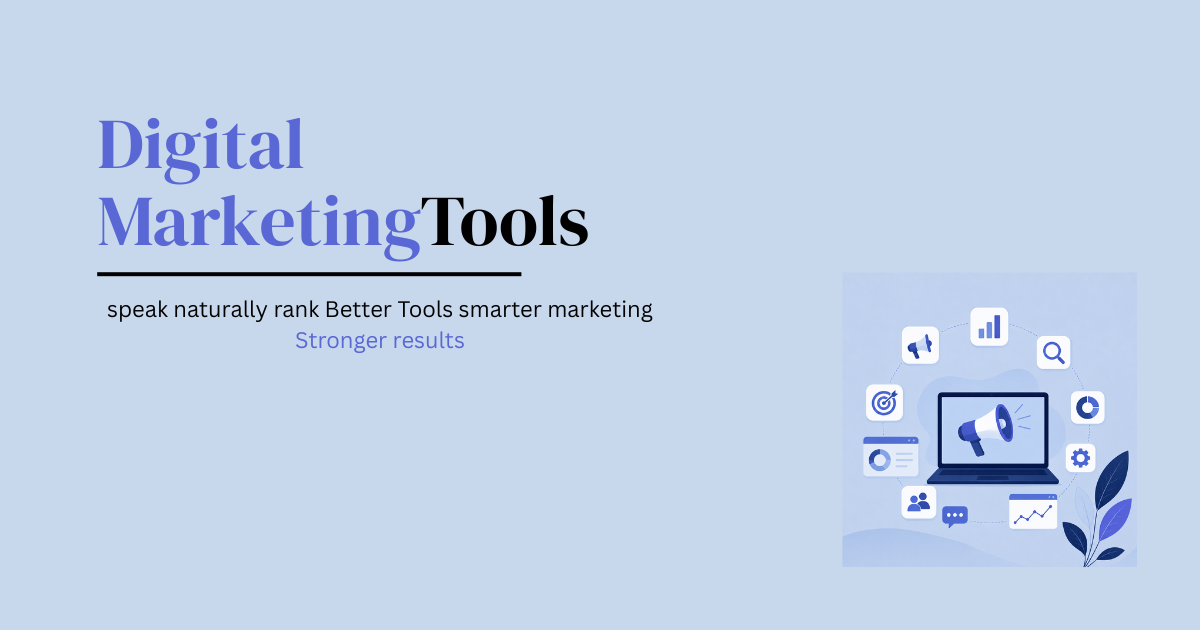
The right tools can make digital marketing significantly more efficient, saving time while improving results. With so many options available, it can be overwhelming to know which digital marketing tools are actually worth using. This guide covers the essential categories every marketer should know about.
1.Keyword Research Tools
Understanding what people are searching for is the starting point for both SEO and paid advertising. Reliable keyword research tools show search volume, competition level, and related keyword suggestions, helping marketers create content and campaigns that target real demand.
2.Google's Free Keyword Tool
Google offers its own google keyword tool as part of Google Ads, which is especially useful for planning both paid campaigns and content strategy since the data comes directly from actual Google search data.
3.SEO Analysis Tools
These tools help you audit your website for technical SEO issues, track keyword rankings, and analyze competitor strategies. Regular use of SEO tools helps identify problems before they significantly impact your search visibility.
4.Social Media Management Tools
Instead of manually posting on each platform, social media management tools let you schedule posts in advance, track engagement, and manage multiple accounts from a single dashboard, saving significant time for marketers managing several platforms.
5.Email Marketing Platforms
These tools help design, send, and track email campaigns. Good email platforms allow segmentation, automation, and detailed analytics on open rates and click-through rates, making email marketing far more effective than manual sending.
6.Marketing Automation Tools
Beyond just scheduling posts or emails, marketing automation tools can trigger entire sequences of actions based on customer behavior — like sending a follow-up email after someone abandons their shopping cart, without requiring manual intervention.
7.Analytics and Reporting Tools
Understanding what's working requires proper analytics. These tools track website traffic, user behavior, conversion rates, and campaign performance, giving marketers the data needed to make informed decisions rather than relying on guesswork.
8.Design Tools
Creating professional-looking graphics, social media posts, and ad creatives no longer requires advanced design skills. User-friendly design tools with templates make it possible for marketers to create quality visuals quickly.
9.AI-Powered Content Tools
AI writing and content generation tools help speed up the content creation process, from generating blog outlines to writing social media captions, allowing marketers to produce more content in less time.
10.Landing Page Builders
These tools allow marketers to create and test landing pages without needing coding knowledge, making it easy to launch campaign-specific pages quickly and test different versions to see what converts best.
11.Choosing the Right Tools for Your Business
Not every business needs every tool. Small businesses should start with a few essential tools — a keyword research tool, an analytics platform, and a social media scheduler — before investing in more advanced or specialized software.
12.Free vs. Paid Tools
Many tools offer free versions with limited features, which are perfect for beginners or small businesses testing different strategies. As your marketing needs grow, upgrading to paid versions typically unlocks more detailed data and advanced features.
13.Customer Relationship Management (CRM) Tools
CRM tools help businesses track interactions with leads and customers, keeping all communication history, purchase records, and follow-up reminders organized in one place, which is essential once a business grows beyond a handful of customers.
14.Heatmap and User Behavior Tools
These tools show exactly how visitors interact with your website — where they click, how far they scroll, and where they drop off. This visual data helps identify exactly where your website might be losing potential customers.
15.Project Management Tools for Marketing Teams
Coordinating content calendars, campaign deadlines, and approvals becomes much easier with project management tools, especially for teams managing multiple campaigns and clients simultaneously across different platforms and channels.
16.Common Mistakes When Using Marketing Tools
- Buying too many tools without a clear plan for using them - Not taking time to learn a tool properly before giving up on it - Relying entirely on automation without human review - Ignoring the data these tools provide instead of acting on it
Conclusion
The right digital marketing tools can significantly improve efficiency and results, but tools alone don't guarantee success — strategy and consistent effort matter more. Start with the essentials, learn them well, and gradually expand your toolkit as your marketing needs grow.
More from our blog
See all posts

Recent Posts
- Digital Marketing Tools Every Marketer Needs July 29, 2026
- Optimize for Voice Search: A Complete Guide July 29, 2026
- Top Social Media Trends to Watch in 2026 July 29, 2026