

Introduction
Businesses need effective ways to reach potential customers online. Search engines and social media platforms help brands connect with people who are interested in their products or services. Pay per click in digital marketing is a popular online advertising method that allows businesses to promote their offerings and attract relevant visitors to their websites.
Understanding this advertising strategy helps business owners and marketers make informed decisions. It can support brand awareness, increase website traffic, generate leads, and encourage online sales when campaigns are planned and managed carefully.
This guide explains how PPC works, its benefits, common advertising platforms, and best practices businesses can follow to use their advertising budgets responsibly.
What Is Pay-Per-Click Advertising?
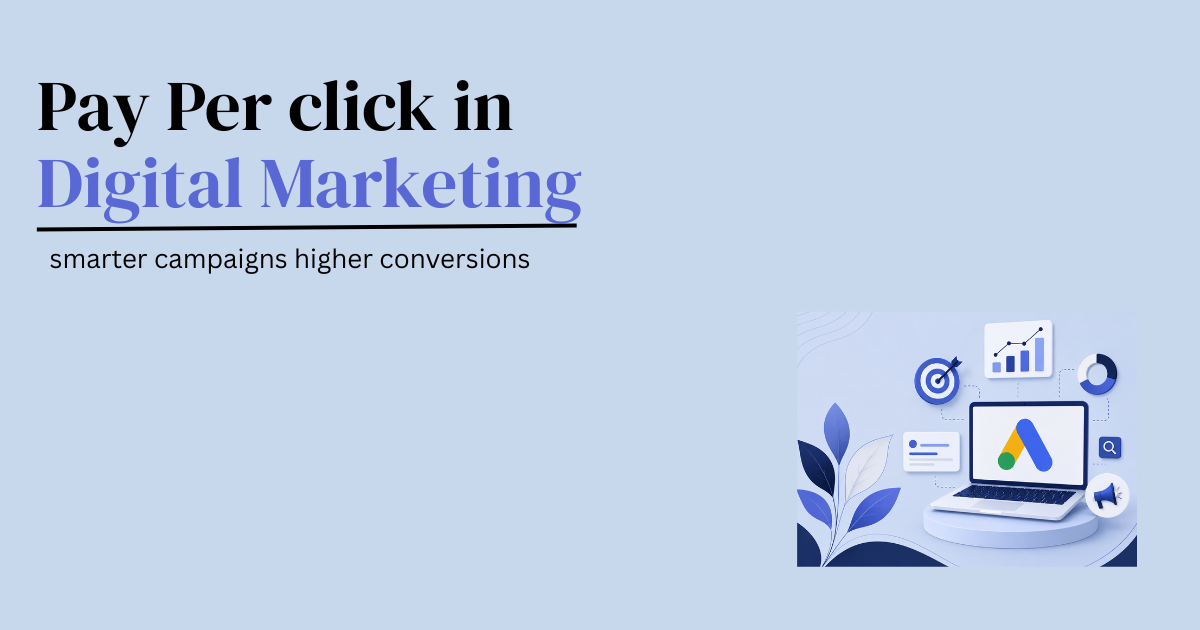
Pay-per-click (PPC) is an online advertising model in which advertisers generally pay when someone clicks on their advertisement. These ads may appear on search engine results pages, social media feeds, websites, and other digital platforms.
For example, a person searching for “affordable website design services” may see a sponsored advertisement from a web design company. If the person clicks the ad, the advertiser may be charged for that click.
The actual cost depends on factors such as competition, audience targeting, bidding strategy, and advertising platform. A click does not guarantee a sale or a new customer, so businesses should measure the quality of their website traffic as well as the number of clicks they receive.
How Does PPC Work?
A PPC campaign usually involves several steps. First, the advertiser selects an advertising platform and defines the campaign objective. The objective may be to increase website visits, generate leads, promote a product, or encourage purchases.
Next, the advertiser researches relevant keywords or identifies a suitable audience. For example, a digital marketing agency may target people searching for SEO services in their city.
Advertisers then create ad copy, select a landing page, and set a budget and bidding strategy. On search engines, ads may enter an auction when a relevant search occurs. The platform considers factors such as the bid, ad quality, and other auction signals when deciding which ads to show and where they appear.
After the campaign starts, marketers monitor performance and make adjustments based on actual results. They may improve the ad text, refine targeting, test landing pages, or change bids to achieve the campaign's goals.
Popular PPC Advertising Platforms
Businesses can choose different platforms depending on their target audience, products, services, and marketing objectives.
1. Google Ads
Google Ads allows businesses to display advertisements across Google's advertising network. Search campaigns can show ads when users search for relevant products or services. Other campaign types can reach people through additional placements, depending on the campaign settings.
For example, a Jaipur-based web design company can target relevant searches from people looking for website development services.
2. Meta Ads
Meta Ads allows businesses to advertise on Facebook and Instagram. Advertisers can reach audiences based on available targeting options, interests, demographics, and other signals, subject to platform policies and settings.
These campaigns are useful for promoting products, introducing a brand to new audiences, and generating leads. However, payment models vary by campaign, and not every Meta campaign is charged exclusively per click.
3. Microsoft Advertising
Microsoft Advertising allows businesses to reach people through Microsoft's advertising network, including eligible search placements. It can provide an additional channel for reaching relevant search audiences.
The right platform depends on where potential customers spend their time and which channels produce valuable business results.
Benefits of PPC Advertising
Using pay per click in digital marketing can offer several benefits when campaigns are planned around clear business objectives.
-
Faster visibility: Paid advertisements can appear in eligible placements soon after a campaign becomes active and passes the required checks.
-
Targeted reach: Advertisers can reach relevant audiences using available location, keyword, demographic, and other targeting options.
-
Budget control: Businesses can set budgets and monitor spending, although actual costs and delivery depend on campaign settings and platform rules.
-
Measurable performance: Advertising dashboards provide information about impressions, clicks, costs, conversions, and other available metrics.
-
Flexible optimization: Marketers can test different messages, audiences, and landing pages to identify opportunities for improvement.
These benefits do not guarantee business growth. Results depend on competition, offer quality, website experience, campaign settings, and the ability to convert visitors into customers.
Important PPC Metrics to Track
Measuring campaign performance helps marketers understand whether their advertising investment is producing useful results.
| Metric | Meaning |
|---|---|
| Impressions | The number of times an ad is shown. |
| Clicks | The number of times people click an ad. |
| Click-through rate (CTR) | The percentage of impressions that result in clicks. |
| Cost per click (CPC) | The average amount paid for each click. |
| Conversion rate | The percentage of relevant interactions that result in a desired action, based on the measurement setup. |
| Cost per conversion | The average advertising cost for each recorded conversion. |
| Return on ad spend (ROAS) | The revenue attributed to advertising divided by advertising spend, where revenue tracking is available. |
For example, if a campaign spends ₹5,000 and records 100 clicks, its average cost per click is ₹50. This calculation shows the cost of attracting visitors, but it does not tell the advertiser whether those visitors generated leads or sales.
Businesses should select metrics that match their goals rather than focusing only on clicks or impressions.
Best Practices for Creating a Successful PPC Campaign
A well-managed campaign starts with research and continues with regular performance reviews. The following practices can help improve campaign quality.
Choose relevant keywords: Research the terms your potential customers use. Focus on search intent and consider negative keywords to reduce irrelevant traffic.
Write clear advertisements: Explain what your business offers and why it is relevant to the user's needs. Avoid misleading claims, exaggerated promises, or information that the landing page does not support.
Create useful landing pages: Ensure the page matches the advertisement, loads reliably, works on mobile devices, and makes the next step easy to understand.
Set a realistic budget: Decide how much your business can afford to spend and monitor the actual costs. Start with a manageable budget while gathering enough data to evaluate performance.
Track conversions correctly: Configure appropriate measurement for meaningful actions, such as completed enquiry forms, qualified leads, or purchases. Follow applicable privacy requirements and platform policies.
Review and improve regularly: Analyse search terms, audience performance, conversion data, and campaign costs. Make changes based on evidence rather than assuming that every increase in clicks will improve business results.
Following these practices makes it easier to evaluate pay per click in digital marketing as part of a wider strategy rather than treating advertising as an isolated activity.
PPC vs Organic SEO
PPC and search engine optimization (SEO) both help businesses reach people through search engines, but they work differently.
PPC can provide paid visibility when ads are eligible to appear, while SEO focuses on improving a website's visibility in unpaid search results. Paid traffic generally depends on campaign funding and delivery, whereas organic SEO requires ongoing work on content, technical performance, and website relevance.
Neither method guarantees rankings, traffic, or sales. Businesses can use both approaches together: PPC can help test commercial messages and attract visitors, while SEO can support long-term organic visibility.
The appropriate balance depends on the business's budget, competition, timeline, and marketing goals.
Common PPC Mistakes to Avoid
Some businesses spend money on advertisements without defining what success means. Others target overly broad keywords, send visitors to unrelated landing pages, or fail to measure conversions.
Ignoring negative keywords can also attract irrelevant clicks. Similarly, making frequent campaign changes without enough performance data may make it harder to understand what is working.
To avoid these problems, establish a clear objective, check tracking before launching, review performance consistently, and use reliable data to guide decisions. Remember that a high click-through rate does not automatically mean a campaign is profitable.
Conclusion
Pay per click in digital marketing is a useful advertising approach for businesses that want to reach relevant audiences and measure their online marketing activity. It offers opportunities to attract website visitors, generate leads, and promote products or services through platforms such as Google Ads and Meta Ads.
However, successful advertising requires more than paying for clicks. Businesses need relevant targeting, honest ad copy, useful landing pages, accurate conversion tracking, and regular optimization.
By understanding campaign costs and evaluating meaningful business outcomes, marketers can make better decisions about their advertising budgets. PPC works best when it supports a clear strategy and focuses on delivering genuine value to potential customers.
More from our blog
See all posts

Recent Posts
- Pay Per Click in Digital Marketing: A Complete Beginner’s Guide October 22, 2026
- Digital Marketing Strategies for Small Businesses September 22, 2026
- Digital Marketing for Business Growth: Complete Guide September 22, 2026