

Digital Marketing Strategies for Small Businesses
Running a small business comes with many challenges. Business owners need to manage customers, employees, products, finances, and daily operations. At the same time, they need to make sure potential customers can find their business online.
The internet has changed how people discover and evaluate businesses. Customers may search on Google, check social media, read reviews, visit a website, or compare different options before making a decision.
For this reason, Digital Marketing Strategies for Small Businesses can help businesses build online visibility, connect with their target audience, and create opportunities for growth.
The good news is that small businesses do not need a huge marketing budget to begin. They need a clear plan, consistent effort, and a good understanding of their customers.
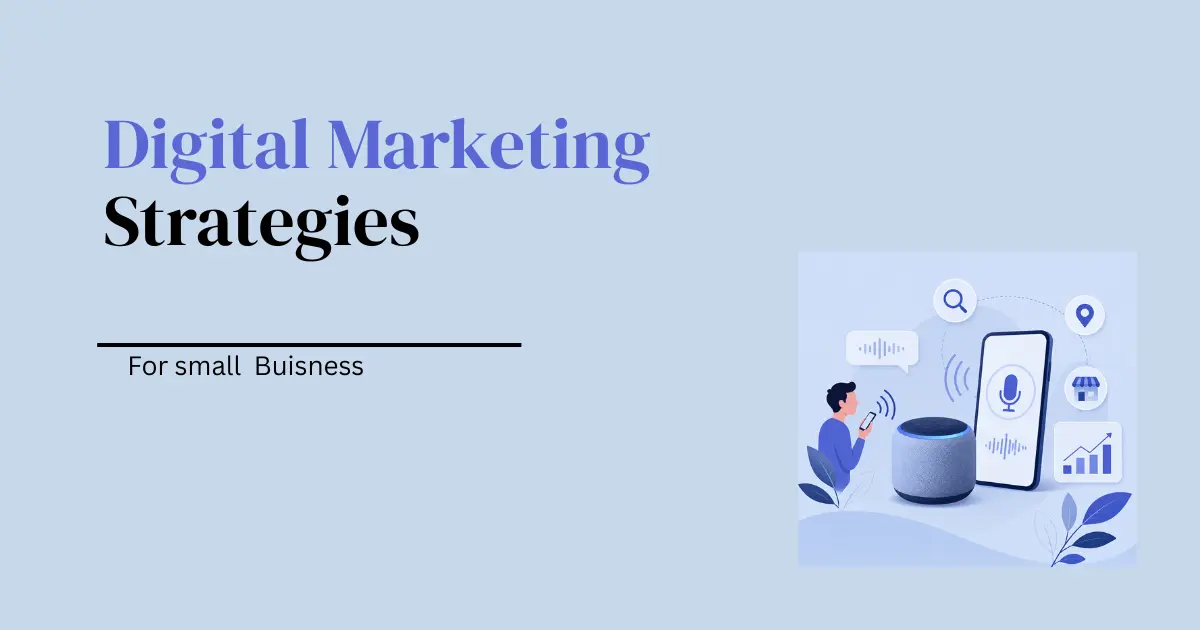
Understand Your Target Audience
Before choosing marketing channels, businesses should understand who they want to reach.
Ask simple questions such as:
- Who is my ideal customer?
- What problem does my product or service solve?
- Where do my customers search for information?
- What questions do they ask?
- Why would they choose my business?
- What type of content do they find useful?
For example, a local fitness trainer may target working professionals in a particular city. A handmade jewellery business may focus on customers interested in unique fashion products.
Knowing the target audience helps businesses create more relevant messages and choose suitable marketing channels.
This is an important first step when developing Digital Marketing Strategies for Small Businesses because a strategy works better when it is based on customer needs rather than simply following trends.
1. Build a Professional Website
A website acts as a digital home for a business.
Social media platforms are useful, but businesses do not control how those platforms change their features, algorithms, or policies. A website gives businesses a central place to explain their services, display products, share contact information, and build credibility.
A small-business website should generally include:
- Clear business information
- Products or services
- Contact details
- Strong calls to action
- Mobile-friendly design
- Easy navigation
- Useful and relevant content
- Fast-loading pages
The website does not need dozens of pages. It needs to clearly communicate what the business offers and how customers can take the next step.
Want to create a professional website for your business? Check out our website design services and take your online presence to the next level.
A professional website can also support other Digital Marketing Strategies for Small Businesses, including SEO, content marketing, Google Ads, and social media campaigns.
2. Focus on Local SEO
Local SEO can help businesses reach people searching for nearby products and services.
A local restaurant, salon, clinic, repair service, coaching centre, or digital agency can benefit from appearing in relevant local search results.
Businesses should keep their business information accurate and consistent across relevant online platforms. They can also encourage genuine customers to leave honest reviews.
Creating useful location-based content can also support local visibility.
For example, a bakery in Jaipur could create content about birthday cakes, custom cakes, or popular cake options available in Jaipur.
Local SEO can therefore become an important part of Digital Marketing Strategies for Small Businesses, especially for businesses that depend on customers from a specific area.
3. Use Social Media With a Purpose
Social media gives small businesses an affordable way to communicate with their audience.
However, simply posting every day does not automatically create business growth.
Businesses should first decide what they want their social media presence to achieve.
Content can include:
- Educational posts
- Product demonstrations
- Customer stories
- Behind-the-scenes content
- Frequently asked questions
- Short videos
- Offers
- Industry tips
- Customer testimonials
A simple content calendar can make posting more consistent.
Businesses should also focus on creating content that is useful or interesting to their target audience instead of posting only promotional messages.
4. Create Useful Content
Content marketing can help small businesses demonstrate their knowledge and answer customer questions.
For example, a home interior company can publish an article about choosing furniture for a small room. A digital marketing agency can explain how SEO works. A bakery can share cake-selection tips.
Useful content can attract people who are already interested in a particular problem, product, or topic.
Businesses should focus on quality rather than publishing large amounts of content without a clear purpose.
Blog articles, videos, guides, social media posts, infographics, and FAQs can all become part of a content strategy.
Creating useful content is one of the most practical Digital Marketing Strategies for Small Businesses because businesses can use their existing knowledge to educate potential customers.
5. Use Google Ads Carefully
Paid advertising can help businesses reach potential customers more quickly.
Google Ads can be useful when people actively search for products or services. A local plumber, for example, can target relevant searches in the locations where the business operates.
Small businesses should set clear advertising budgets and track their results.
Before increasing advertising spending, they should understand whether campaigns are generating useful enquiries, leads, bookings, or sales.
Businesses should also create relevant landing pages so that people who click an advertisement can quickly find the information they need.
6. Consider Meta Ads
Meta Ads can help businesses reach audiences through platforms such as Facebook and Instagram.
These campaigns can support different objectives, including:
- Brand awareness
- Website traffic
- Engagement
- Lead generation
- Sales
- Customer acquisition
Good creative matters. Businesses should use clear visuals, relevant messaging, and a strong call to action.
Testing different advertisements can help identify which messages connect better with the target audience.
For small businesses, starting with a controlled budget and monitoring campaign performance can be more practical than spending a large amount without proper tracking.
7. Build an Email List
Email marketing can help small businesses stay connected with existing customers and interested prospects.
Businesses can send:
- Newsletters
- Product updates
- Special offers
- Educational information
- Event announcements
- Follow-up messages
- New product information
Businesses should collect email addresses ethically and communicate with people who have provided appropriate permission.
Email marketing can be particularly useful because it allows businesses to maintain communication with people who have already shown interest in their products or services.
It can also work alongside other Digital Marketing Strategies for Small Businesses by helping businesses maintain relationships after a website visit or purchase.
8. Track Your Results
Marketing without measurement makes it difficult to understand what works.
Small businesses can track basic metrics such as:
- Website visits
- Enquiries
- Phone calls
- Leads
- Sales
- Social media engagement
- Advertising costs
- Conversion rates
The exact metrics depend on the business.
For example, a local service company may care more about phone calls and enquiries than social media likes.
An online store may focus more on purchases, revenue, conversion rate, and customer acquisition costs.
Tracking results helps businesses identify which activities are producing useful outcomes and where improvements may be needed.
9. Use SEO for Long-Term Visibility
SEO can help businesses improve their visibility in organic search results.
A small business can optimize its website by researching relevant keywords, creating useful content, improving page structure, making the website mobile-friendly, and addressing technical issues.
For example, a local bakery may create pages and articles related to birthday cakes, wedding cakes, custom cakes, and cake delivery in its service area.
SEO generally takes time, so businesses should not expect immediate results.
However, consistent SEO work can become an important part of Digital Marketing Strategies for Small Businesses because organic search can help potential customers discover a business when they are actively looking for relevant products or services.
10. Start Small and Improve
One of the biggest mistakes small businesses make is trying to do everything at once.
You do not need to immediately run SEO, five social media platforms, email campaigns, Google Ads, Meta Ads, influencer marketing, and content marketing.
Start with the channels most relevant to your customers.
For example, a local restaurant may begin with a professional website, local SEO, Instagram, customer reviews, and Google Ads.
A B2B service company may focus more on its website, SEO, LinkedIn, content marketing, and email.
Want to know more about our B2B services? Check out this b2b services page to learn more.
Once you understand the results, you can gradually expand your marketing activities.
Starting with a focused strategy makes Digital Marketing Strategies for Small Businesses easier to manage and measure.
Common Mistakes to Avoid
Small businesses should avoid several common marketing mistakes.
Copying Competitors
A competitor's strategy may not work for your business because your customers, products, budget, and objectives may be different.
Buying Fake Followers
Follower numbers do not automatically create customers. Businesses should focus on genuine audience engagement and relevant customers.
Ignoring Customer Feedback
Reviews and customer feedback can provide useful information about what customers like and where the business can improve.
Publishing Low-Quality Content
Publishing content simply to stay active may not provide much value. Businesses should focus on useful, accurate, and relevant information.
Spending Without Tracking
Advertising without measuring results can make it difficult to understand whether the money is producing useful outcomes.
Expecting Instant SEO Results
SEO generally requires time, consistency, and continuous improvement. Businesses should set realistic expectations.
How to Create a Simple Digital Marketing Plan
Small businesses can follow a simple process to create their marketing plan.
Step 1: Define Your Goal
Decide whether you want more awareness, website visitors, leads, enquiries, bookings, or sales.
Step 2: Understand Your Audience
Identify your ideal customers, their problems, interests, location, and online behaviour.
Step 3: Select Suitable Channels
Choose the channels where your target customers are most likely to be active.
Step 4: Create Useful Content
Develop content that answers questions, explains products, solves problems, or helps customers make decisions.
Step 5: Set a Budget
Decide how much you can realistically invest in marketing and advertising.
Step 6: Track Performance
Monitor meaningful metrics that connect marketing activities with your business goals.
Step 7: Improve Over Time
Use the information from your results to improve your campaigns, content, website, and overall strategy.
Following these steps can make Digital Marketing Strategies for Small Businesses more organized and easier to manage.
Conclusion
Effective Digital Marketing Strategies for Small Businesses do not have to be complicated or expensive.
A small business can begin with a professional website, local SEO, useful content, social media, email marketing, and carefully managed advertising.
The most important part is consistency. Businesses should understand their audience, choose appropriate channels, create useful content, measure meaningful results, and improve their strategy over time.
Digital marketing should support the business, not become a burden. With a focused plan, realistic expectations, and regular improvement, even a small business can build a stronger online presence and create more opportunities to reach potential customers.
More from our blog
See all posts
Recent Posts
- Pay Per Click in Digital Marketing: A Complete Beginner’s Guide October 22, 2026
- Digital Marketing Strategies for Small Businesses September 22, 2026
- Digital Marketing for Business Growth: Complete Guide September 22, 2026