

Here's a practical guide to SEO for small businessFor small businesses with limited marketing budgets, search engine optimization offers one of the best long-term returns on investment. Unlike paid ads that stop working the moment you stop paying, good SEO continues bringing traffic for months or even years.
SEO (Search Engine Optimization) is the process of improving your website and content so that it appears higher in search engine results when people search for products, services, or information related to your business.
Here's a practical guide to SEO for small businesses.
Want to know more about SEO in digital marketing? Check out this guide:SEO Meaning in Digital Marketing
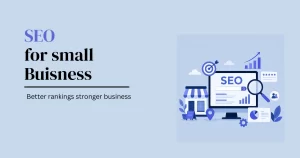
Why SEO Matters for Small Businesses
Most customers today search online before making a purchase decision, even when they are looking for a local business. If your business does not appear in relevant search results, you may lose potential customers to competitors with stronger online visibility.
A well-planned SEO for small business strategy can help improve website visibility, attract relevant visitors, and create more opportunities to generate leads and sales. Unlike advertising, SEO focuses on building organic visibility that can continue providing value over time.
Start with Keyword Research
Understanding what your potential customers are searching for is one of the foundations of SEO. Using a reliable keyword planner tool, small business owners can discover relevant search terms, understand search volume, and identify keywords with realistic competition.
For example, a local bakery might research keywords such as "best bakery near me," "birthday cakes in Jaipur," or "custom cakes near me." Choosing keywords that match customer search intent can help businesses create more useful website pages and content.
Optimize Your Google Business Profile
For local businesses, Google Business Profile optimization can be extremely important. A complete and accurate profile can help your business appear in local search results and Google Maps.
Make sure your profile includes:
- Correct business name and contact information
- Accurate business hours
- Relevant business categories
- Updated photos
- Products or services
- A clear business description
- Customer reviews and responses
Keeping this information accurate can make it easier for potential customers to understand your business and contact you.
Focus on On-Page SEO Basics
Every important page on your website should have a clear and unique title, a useful meta description, and properly structured headings. These elements help search engines understand the topic of your page.
You should also use relevant keywords naturally within your content. Avoid adding the same keyword repeatedly just to increase keyword density. Instead, focus on writing content that answers the questions and needs of your target audience.
Other useful on-page practices include descriptive URLs, image alt text, internal links, and clear page structure.
Create Helpful, Relevant Content
Blog posts, FAQs, guides, and educational articles can help small businesses attract people who are searching for information related to their products or services.
For example, a digital marketing agency could create content about SEO, Google Ads, social media marketing, website design, and online advertising. This gives the website opportunities to appear for different relevant searches.
Helpful content can also build trust with potential customers before they contact your business.
Improve Website Speed and Mobile Experience
A slow website can create a poor user experience. Since many people browse and search using smartphones, your website should work properly on mobile devices.
Check that your website:
- Loads quickly
- Works well on smartphones
- Has easy-to-read text
- Uses clear navigation
- Has properly sized images
- Provides a simple user experience
Technical improvements are an important part of a strong SEO for small business strategy because search visibility and user experience work together.
Consider Working with an SEO Service
Managing SEO can become difficult when business owners are already handling customers, employees, sales, and daily operations. In such cases, working with a search engine optimization service can provide professional support.
An SEO service may help with technical SEO, keyword research, content strategy, local SEO, website optimization, and link-building activities.
Before hiring a service, businesses should understand what work will be performed and how progress will be measured.
Build Local Citations and Backlinks
Getting your business listed in relevant local directories can help strengthen your online presence. Make sure your business information is accurate and consistent across important platforms.
Backlinks can also contribute to website authority. When reputable and relevant websites link to your content, it can provide additional signals about the usefulness and credibility of your website.
However, businesses should focus on earning relevant, quality links rather than trying to build a large number of low-quality links.
Follow Basic SEO Tips Consistently
Simple SEO tips for beginners can make a difference when applied consistently. These include using descriptive image alt text, avoiding duplicate content, creating useful page titles, improving internal linking, and keeping website information updated.
You do not need to make dozens of changes at once. Start with the most important issues and improve your website step by step.
Monitor Your Rankings and Traffic
SEO should be measured regularly. Free tools such as Google Search Console and Google Analytics can help you understand how your website is performing.
You can monitor:
- Organic website traffic
- Search queries
- Website clicks
- Impressions
- Pages receiving traffic
- Keyword performance
- User engagement
This information can show you what is working and where further improvements may be needed.
Be Patient and Consistent
SEO is not a quick fix. Depending on the website, competition, industry, content quality, and other factors, it can take time to see meaningful results.
Businesses should avoid expecting immediate rankings and giving up after a few weeks. A consistent approach to content, technical improvements, local optimization, and website quality can help build stronger organic visibility over time.
Leverage Customer Questions
Your existing customers can provide excellent ideas for SEO content. Pay attention to the questions they ask in person, over the phone, through email, or on social media.
These questions can become blog posts, FAQs, guides, or service-page content. Because they come directly from customers, they can help you create content around topics your target audience actually cares about.
Keep Content Fresh
Old content can become outdated when information, statistics, products, services, or industry practices change.
Review important blog posts regularly and update outdated information where necessary. You can improve readability, add useful information, update statistics, and remove information that is no longer relevant.
Keeping useful content accurate can improve its value for both users and search engines.
Use Internal Linking Wisely
Internal links connect different pages on your website. For example, a blog post about SEO can link to a related article about keyword research or a relevant SEO service page.
Internal linking helps visitors discover additional information and helps search engines understand the relationship between different pages on your website.
Use descriptive and relevant anchor text rather than adding links randomly.
Common SEO Mistakes Small Businesses Make
Some common mistakes include:
- Ignoring mobile optimization
- Not claiming or updating their Google Business Profile
- Focusing only on keywords instead of providing useful content
- Expecting overnight results
- Publishing content without understanding search intent
- Ignoring website speed
- Not monitoring SEO performance
- Using low-quality or irrelevant backlinks
Avoiding these mistakes can help create a more sustainable approach to SEO for small business.
Conclusion
SEO for small business is a practical way to build long-term online visibility without depending entirely on paid advertising. By focusing on keyword research, local optimization, useful content, website performance, internal linking, and consistent monitoring, small businesses can improve their chances of reaching relevant customers through search engines.
SEO requires patience and regular improvement, but a well-maintained website can continue attracting organic visitors and creating opportunities for business growth over time. If you want to learn more about SEO and how it works in digital marketing, check out our complete guide to SEO in digital marketing. You can also check out Search engine optimizationton learn more about SEO and related topics.
More from our blog
See all posts



Recent Posts
- Pay Per Click in Digital Marketing: A Complete Beginner’s Guide October 22, 2026
- Digital Marketing Strategies for Small Businesses September 22, 2026
- Digital Marketing for Business Growth: Complete Guide September 22, 2026